
Driverless taxis are coming to Minneapolis. Waymo, the autonomous vehicle company owned by Google's parent company, Alphabet, has begun testing vehicles on city streets as it prepares to introduce a ride-hailing service without human drivers.
The company announced its Minneapolis expansion in November 2025. For now, its vehicles have been operating with human drivers behind the wheel, and the company hasn’t announced when Minneapolis residents can request a fully driverless ride.
Waymo's arrival raises questions about how the technology will handle Minnesota roads, whether autonomous vehicles will make driving safer, and what happens when a driverless taxi is involved in an accident.
How Do Waymo Driverless Taxis Work?
Unlike traditional taxis or rideshare services such as Uber and Lyft, Waymo vehicles are designed to operate without a person controlling the steering wheel, accelerator, or brakes.
Waymo's automated driving system, called the Waymo Driver, uses cameras, radar, lidar sensors, and computer software to monitor its surroundings and make driving decisions. The technology identifies other vehicles, pedestrians, cyclists, traffic signals, and obstacles while navigating city streets.
In cities where the service is available, passengers request rides through the Waymo app. A vehicle arrives, the passenger gets in, and the automated system handles the trip.
Waymo has expanded its operations across several major U.S. cities. Minneapolis is among the markets where the company is preparing for future service.
Can Waymo Handle Minnesota Winters?
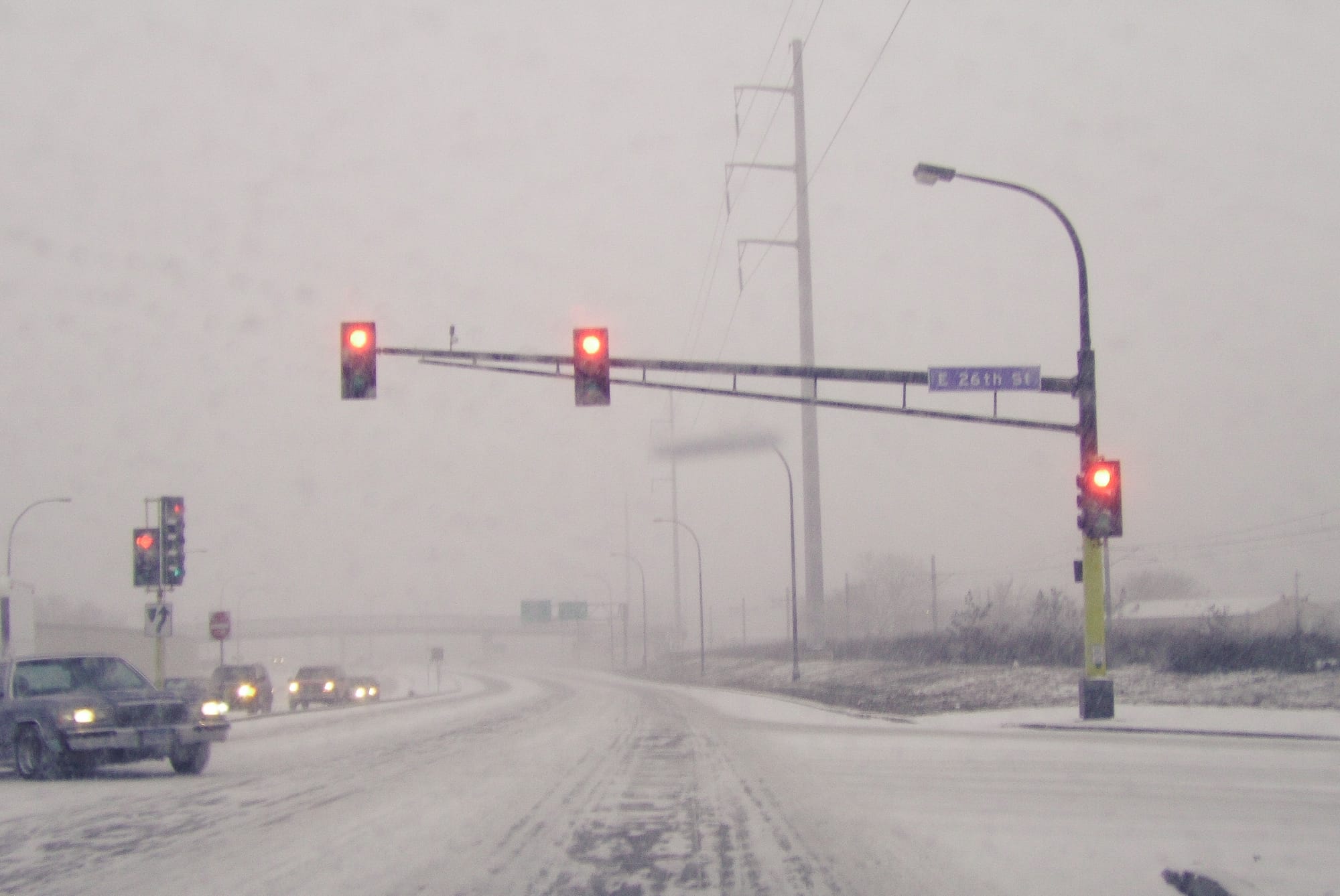
One of the biggest challenges for autonomous vehicles in Minneapolis is something Minnesota drivers know all too well: winter. Snow-covered roads, icy intersections, poor visibility, and lane markings hidden beneath slush can make driving difficult even for experienced motorists.
Waymo says it has tested its technology in winter conditions, including Michigan's Upper Peninsula, the Sierra Nevada mountains, and upstate New York. The company is also developing technology intended to help its vehicles operate in snow and ice.
But Minneapolis presents its own challenges. Snowbanks can narrow streets, plows can change traffic patterns, and pedestrians may enter roadways where crosswalk markings are difficult to see.
As MPR News reported, the company's Minneapolis expansion has prompted questions about whether driverless vehicles can safely navigate the city's winter conditions. Testing in snow is one thing. Operating a commercial driverless taxi service through an entire Minnesota winter is another.
Minneapolis Debates Rules for Driverless Vehicles
Waymo's arrival has also sparked debate over how autonomous taxis should be regulated. In October 2026, the Minneapolis City Council approved an ordinance that would have required driverless rideshare companies to keep a licensed human safety monitor inside their vehicles. Supporters argued that the requirement would improve safety and help protect jobs held by traditional rideshare drivers.
Mayor Jacob Frey vetoed the ordinance, arguing that requiring a driver in a driverless vehicle would effectively prevent the technology from operating as intended.
The City Council failed to override the veto on October 15.
The debate reflects broader concerns about introducing autonomous vehicles, including road safety, public oversight, and the potential impact on existing transportation services. For Minneapolis residents, the discussion is likely to continue as Waymo moves closer to offering passenger rides.
Are Driverless Taxis Safer Than Human Drivers?
Waymo maintains that its autonomous driving technology can reduce accidents caused by human mistakes, including distraction, impairment, and dangerous driving decisions. There are reasons to believe automated technology could prevent some crashes. Computers don’t become intoxicated, fall asleep, or check text messages while driving.
Waymo has published safety research reporting lower rates of certain types of crashes compared with human drivers over comparable distances. Still, autonomous vehicles are not accident-proof. Their performance depends on how well their sensors and software recognize hazards and respond to unpredictable situations.
A driverless vehicle may encounter a pedestrian stepping into traffic, an unexpected construction zone, or another driver making a dangerous maneuver. Minnesota's changing weather adds another layer of complexity.
The important question is not simply whether computers can drive. It's whether the technology can consistently respond safely to the conditions and situations drivers encounter every day.
What Happens When a Waymo Is Involved in an Accident?
Although Waymo vehicles operate differently from traditional cars, an accident involving one still raises familiar concerns. Someone may need medical treatment. A damaged vehicle may require repairs or replacement. An injured person may miss work or need help with everyday household activities.
Minnesota's existing automobile insurance laws provide a starting point for addressing those losses, even when one vehicle is controlled by a computer rather than a human driver. However, determining which insurance company must pay can become more complicated when a commercial driverless taxi is involved.
At Bradshaw & Bryant, our attorneys have more than a century of combined experience handling Minnesota car accident cases and no-fault insurance matters. As autonomous vehicles become more common, understanding how existing insurance protections apply will be increasingly important.
Waymo may change who — or what — is behind the wheel, but it doesn’t eliminate the possibility of an accident or the need to protect people injured on Minnesota roads. If you've been injured in a car accident and have questions about your insurance coverage or legal options, contact Bradshaw & Bryant to discuss your situation.


